Iran & the 2026 World Cup: Will the US-Iran Conflict Force a Withdrawal? FIFA's Full Contingency Plan Explained
From visa bans to military strikes — how escalating US-Iran tensions are threatening one of the most politically charged World Cup stories in history
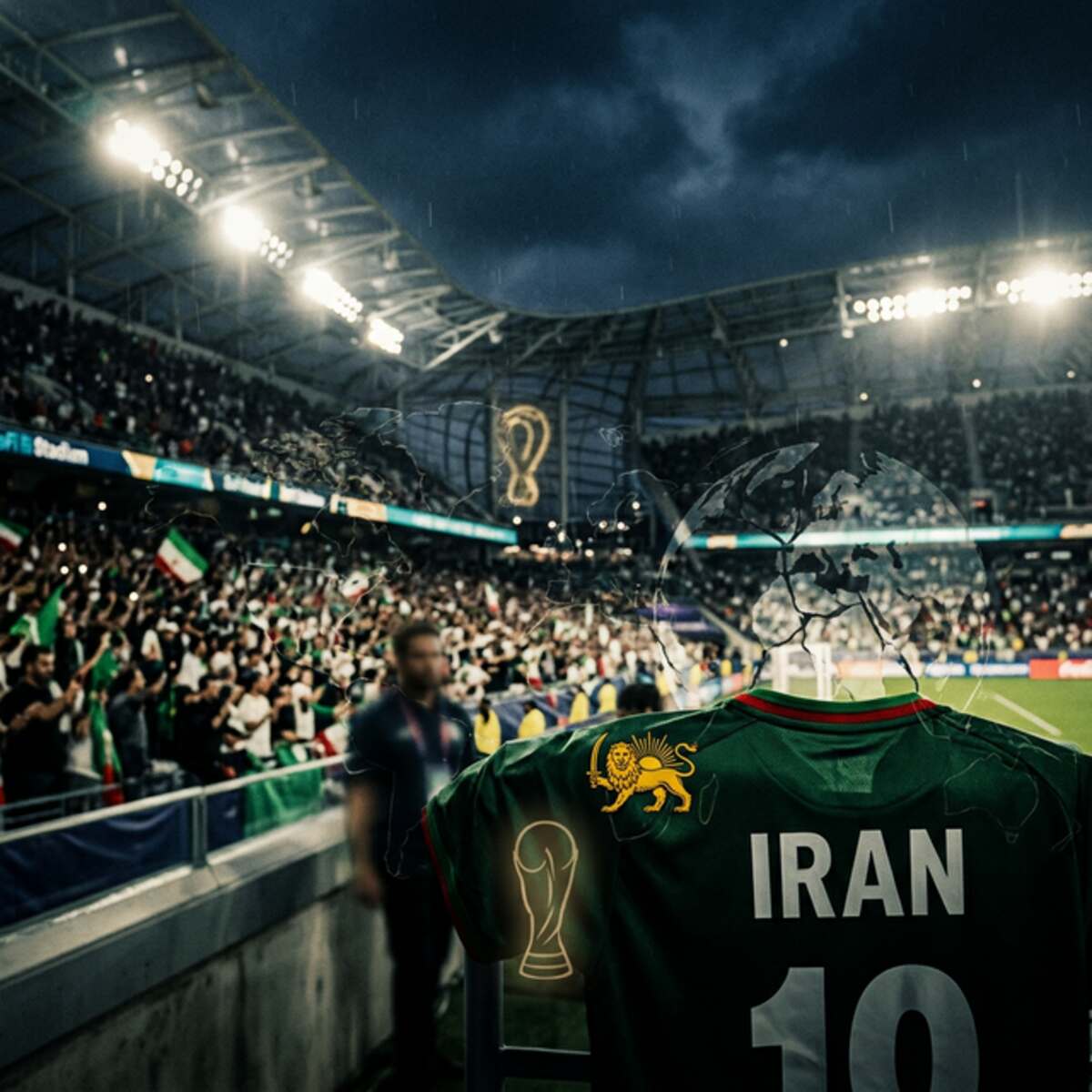
Football has always existed at the intersection of sport and politics. But rarely has the tension between those two worlds felt as acute as it does right now — in the spring of 2026 — as the most ambitious FIFA World Cup in history prepares to kick off in just over 100 days.
Iran qualified for the 2026 FIFA World Cup through the AFC third round, defeating some of Asia's finest sides to earn their place among the tournament's 48 nations. They were drawn into Group G alongside 🇧🇪 Belgium, 🇪🇬 Egypt, and 🇳🇿 New Zealand. Their group-stage matches are scheduled for Los Angeles and Seattle — both in the United States.
And that is where the story becomes dramatically complicated.
🌍 The Escalating Crisis: What Has Happened
The US-Iran tension that has defined Middle Eastern geopolitics for decades has entered a dangerous new phase in early 2026. US and Israeli military operations — including reported strikes on Tehran — have pushed the two nations to the brink of open war, creating a situation unlike anything football's governing body has had to manage since Russia was expelled ahead of Qatar 2022.
The seeds of the current crisis around Iran's World Cup participation were planted even before a ball was kicked. In November 2025, the United States denied entry visas to several members of Iran's Football Federation delegation — including its president — preventing them from attending the FIFA World Cup Draw in Washington D.C. on December 5, 2025. Iran announced a boycott of the draw in protest, before eventually reversing that decision and sending representatives.
It was a sign of things to come. The geopolitical storm has only intensified since.
"We are closely monitoring the situation in Iran. Our priority remains a safe World Cup with all qualified teams participating, but we are prepared for all scenarios." — Mattias Grafström, FIFA Secretary General
🇮🇷 Iran in Group G: What's at Stake
| Detail | Information |
|---|---|
| Group | Group G |
| Group Opponents | 🇧🇪 Belgium · 🇪🇬 Egypt · 🇳🇿 New Zealand |
| US Venues | Los Angeles (SoFi Stadium) · Seattle (Lumen Field) |
| Matches in US | All three group-stage fixtures |
| FIFA Ranking | 22nd (AFC's second highest qualifier) |
| AFC Qualification | Qualified through the AFC Third Round |
Iran's fixtures present no easy alternative. Unlike some other non-US-based Group G teams whose matches span multiple countries, every one of Iran's three group-stage games is scheduled to be played on American soil. There is no workaround, no Canadian or Mexican alternative already on the fixture list.
Iran are scheduled to face:
- 🇳🇿 New Zealand — Los Angeles
- 🇧🇪 Belgium — Los Angeles
- 🇪🇬 Egypt — Seattle
Playing these games would require Iranian players, coaches, officials, and support staff to obtain US visas, travel to American cities, and operate freely through US immigration — all amid an active military confrontation between their government and the United States.
📋 FIFA's Official Contingency Protocol
If Iran withdraws — either voluntarily or due to circumstances beyond their control — FIFA's tournament regulations provide a structured framework for what happens next. Here is how it works, step by step.
Step 1: Replacement Team
Under FIFA's regulations, when a team withdraws after the final draw, the replacement follows this hierarchy:
- Highest-ranked available team from the same confederation (AFC) that did not qualify through the regular process.
- If no AFC team is available within the timeline, the highest-ranked non-qualifying team globally from FIFA's rankings becomes eligible.
The United Arab Emirates (UAE), ranked 68th globally, has been identified by multiple sources as the most likely replacement. The UAE narrowly missed automatic qualification from the AFC Third Round and would be considered the next-in-line from the Asian Football Confederation.
Step 2: Group Format Impact
If Iran withdraws and no replacement is found in time, Group G would be reduced to three teams: Belgium, Egypt, and New Zealand. Under the 48-team 12-group format:
- Each remaining team plays only two group matches instead of three
- Top two teams still advance to the Round of 32
- The best third-placed team comparison could be impacted by the uneven match count — FIFA would apply established protocols used in previous uneven group situations
Step 3: Schedule Restructuring
FIFA has built flexible scheduling windows in late May and early June 2026 precisely for emergency situations. A replacement team could be integrated with minimal disruption to the broader calendar. FIFA's operations team has experience handling last-minute changes at scale.
🏛️ Historical Precedents: How FIFA Has Handled This Before
The 2026 situation is unprecedented in its specific nature — but FIFA has navigated geopolitical crises before, and each has shaped the protocols now in place.
| Year | Situation | FIFA's Response |
|---|---|---|
| 2022 (Qatar) | Russia invaded Ukraine; UEFA/FIFA banned Russia before the draw | Poland replaced Russia in the European play-off path |
| 2006 (Germany) | Zimbabwe's qualification crisis due to government interference | FIFA intervened in the federation's governance |
| 1982 (Spain) | Kuwait threatened to walk off the pitch mid-game | Players returned; FIFA fined Kuwait |
| 1974 | Soviet Union refused to play Chile after the Pinochet coup | USSR were eliminated; Chile advanced |
The Russia 2022 precedent is the closest modern parallel. FIFA and UEFA acted swiftly and decisively, with Poland — the next-eligible team from the European pathway — replacing Russia in the playoff bracket. The machinery FIFA built from that experience now forms the backbone of its 2026 contingency planning.
🔍 Iran's Unique Standing: A Team With Everything to Play For
What makes this story more poignant is the quality and determination Iran showed to get here.
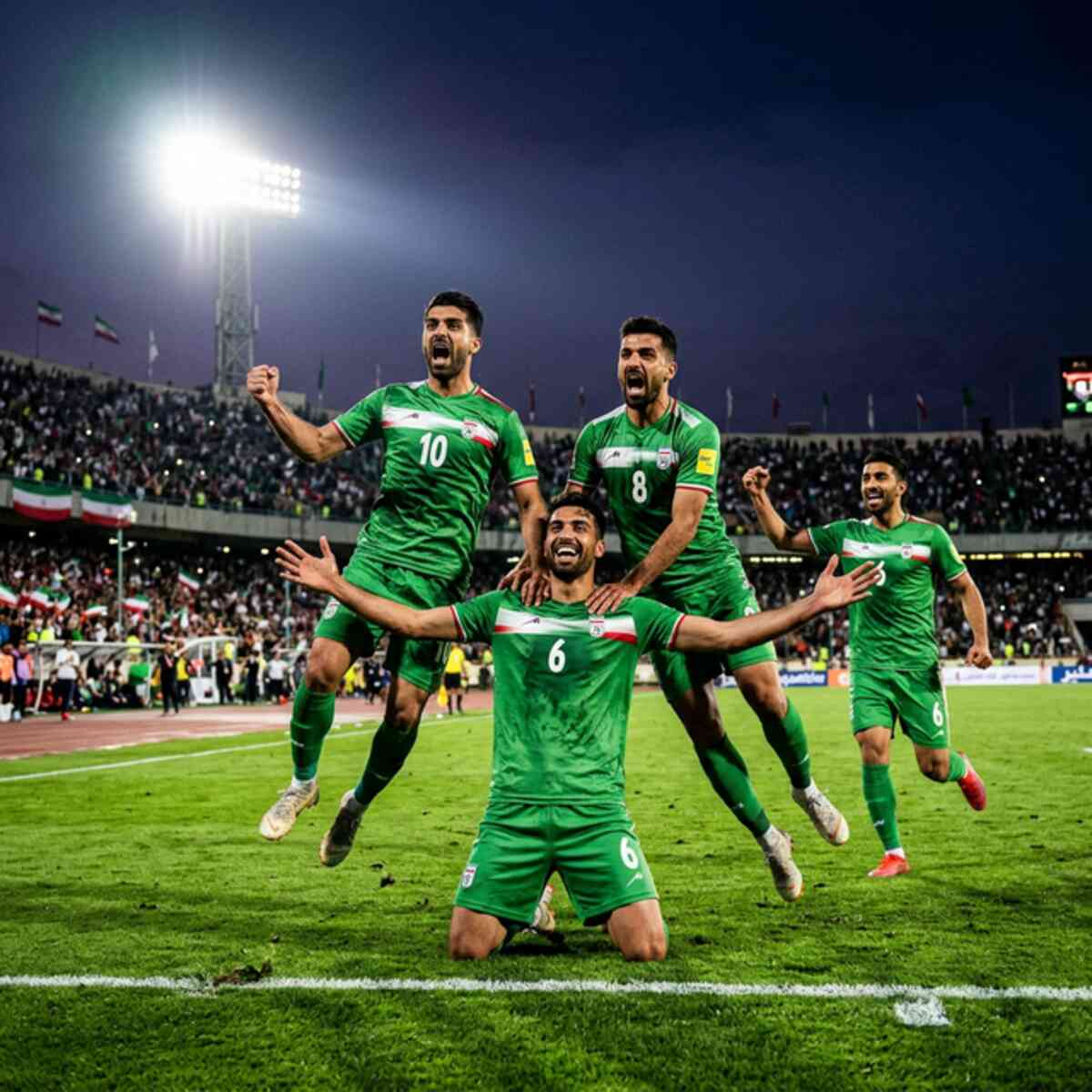
Carlos Queiroz's former charges — now coached by Amir Ghalenoei — delivered some of Asia's most disciplined qualifying performances. Iran topped their AFC Third Round group, finishing ahead of South Korea at one stage, and qualified with matches to spare. Their squad features several European-based professionals:
- Sardar Azmoun – Bayer Leverkusen / former Zenit — Iran's most lethal striker
- Mehdi Taremi – Inter Milan — one of Serie A's most clinical forwards
- Ali Gholizadeh – Spezia / former Charleroi — dangerous wide attacker
- Alireza Beiranvand – experienced goalkeeper who has saved penalties against Portugal and Spain at previous World Cups
This is not a token qualifier. Iran reached the World Cup in 2006, 2014, 2018, and 2022, with their 2022 run in Qatar generating real momentum — including a narrow group exit despite playing against England, USA, and Wales in one of the tournament's most politically charged groups.
Losing this team would be a significant blow to Asian football's representation at the expanded 48-team tournament.
🔐 The Visa Problem: The First Barrier
Even setting aside the military conflict, Iran faces a fundamental logistical challenge: US visas.
The November 2025 visa denial to Iranian football federation officials was a warning shot. For the tournament itself, the entire Iranian squad, technical staff, officials, families, and media personnel would require individual US visas. Under current US-Iran diplomatic conditions — where the two countries have no formal diplomatic relations — this process is extraordinarily complex and cannot be guaranteed.
FIFA's Host Country Agreement with the United States was specifically designed to protect all participating nations' right to attend. FIFA has formally communicated to the US State Department that all qualified nations must be granted access under the terms of the agreement.
Whether that guarantee holds under active military conflict conditions is a question that has no clear precedent.
🏟️ Could Iran's Games Be Moved to Canada or Mexico?
There have been unconfirmed reports that FIFA is exploring whether Iran's group-stage matches could be relocated to neutral venues in Canada or Mexico — co-hosts who are not party to the US-Iran conflict.
The practical complications are significant:
- FIFA regulations place individual group matches at specific host cities agreed well in advance
- Ticket holders in Los Angeles and Seattle would be heavily impacted
- Broadcasting arrangements for specific venues are locked in
- Security frameworks differ significantly across the three co-host nations
However, FIFA has precedent for mid-tournament venue changes due to infrastructure, safety, or political concerns. If the security situation in the US deteriorates significantly, moving Iran's games would be complex but not impossible.
No official decision has been made or publicly confirmed.
🗣️ What Key Stakeholders Are Saying
FIFA Secretary General Mattias Grafström has confirmed that "all scenarios" are being prepared for, while insisting that the organization's priority is Iran's full participation.
Iranian players in Europe privately expressed through club officials their deep concern about traveling to the US. Several have suggested they would prioritize their personal safety — and that of their families — above participation.
The Iranian Football Federation (IFF) has not yet made any formal statement regarding withdrawal, maintaining that Iran intends to compete. Federation communications have been carefully worded to avoid either committing fully or signaling a potential exit.
Belgium, Egypt, and New Zealand — the other Group G teams — have continued preparation as normal, while their federations quietly monitor developments.
⚖️ The Geopolitical Stakes Beyond Football
The 2026 FIFA World Cup was already framed as a tournament carrying enormous geopolitical symbolism. Hosted across the United States, Canada, and Mexico — a region defined in recent years by immigration tensions, trade disputes, and political division — the tournament was intended as a celebration of sporting unity.
Iran's participation adds another layer of complexity. Iran's national football team has historically been one of the few cultural exports the country shares with a global audience that transcends politics. The team's supporters — including the millions of Iranians living in the United States itself — had been among the most anticipated fan groups of the tournament.
A withdrawal removes one of the World Cup's most emotionally charged storylines. For fans inside Iran already living under extraordinary pressure, it would be another loss of a rare source of collective joy.
📊 Impact on Group G and the Broader Tournament
| Area | Impact if Iran Withdraws |
|---|---|
| Group G Balance | Belgium become heavy favourites; Egypt and New Zealand fight for second |
| Match Count | Each team plays two group games instead of three |
| Points Calculation | Third-place comparisons affected — FIFA applies standardized exclusion rules |
| Asian Representation | Down to 7 teams from planned 8 (or 8 if UAE replaces Iran) |
| Ticket Holders | Iran match tickets refunded or exchangeable under FIFA's refund policy |
| Tournament Narrative | Significant geopolitical story removed from proceedings |
| TV Audiences | Iranian diaspora viewership — especially in the US — dramatically reduced |
🔮 Three Possible Outcomes
Scenario 1: Iran Participates Fully ✅
Peace talks succeed or the military situation stabilizes. FIFA and the US State Department negotiate guaranteed visa access. Iran travel, compete, and play all three group games. This remains FIFA's stated preference and the outcome the governing body is actively working toward.
Scenario 2: Iran's Matches Moved to Canada/Mexico 🏟️
The security situation in the US remains too volatile for Iran's participation there, but a negotiated solution allows Iran to play in Vancouver, Toronto, or Mexico City. Complex but technically possible under exceptional circumstances.
Scenario 3: Iran Withdraws Completely ❌
Military conflict escalates, visa guarantees cannot be secured, or Iran's federation makes a sovereign decision not to send their team to American soil. UAE or the next highest AFC-ranked non-qualifier enters as a replacement. Group G becomes a three-team group.
📅 Critical Dates Ahead
| Date | Event |
|---|---|
| March 2026 | Inter-confederation play-offs — potential replacement team identified |
| May 2026 | Final squad submissions deadline — Iran must formally confirm |
| June 2026 | Tournament begins; Group G fixtures in Los Angeles and Seattle |
| Iran's Group Matches | All three scheduled in the United States |
The window for FIFA and diplomatic intermediaries to resolve this situation is narrowing. By the time final squad submissions are due in May, Iran will need to have made a definitive decision.
🎯 The Bottom Line
FIFA is hoping for a peaceful resolution and Iran's full participation. The governing body has clear protocols for replacement, group restructuring, and scheduling adjustments if a withdrawal becomes unavoidable.
But this is not just a football story. It is a story about sport's limits — about whether football's most universal event can remain genuinely universal when geopolitics intervenes at its most extreme.
Iran's players — men like Sardar Azmoun and Mehdi Taremi who have worked their entire careers to reach this moment — may soon face a decision no athlete should ever have to make: between the sport they love and the country they represent in conditions not of their making.
The 2026 World Cup begins in June. The next few weeks may determine whether Iran walks out onto SoFi Stadium in Los Angeles — or watches from home.
Explore more: Full 2026 World Cup Match Schedule · FIFA World Cup 2026 Ticket Guide · Mexico at the 2026 World Cup · All 16 Host Cities Guide
Sources: FIFA.com official regulations, sportbible.com, birminghammail.co.uk, aljazeera.com, Guardian Sports