FIFA Just Cancelled 40% of Its Mexico City Hotel Rooms for the World Cup — Here's Why It's Not a Crisis
800 of 2,000 reserved rooms quietly released in the last 30 days, setting off alarm bells — but is the hotel industry overreacting?
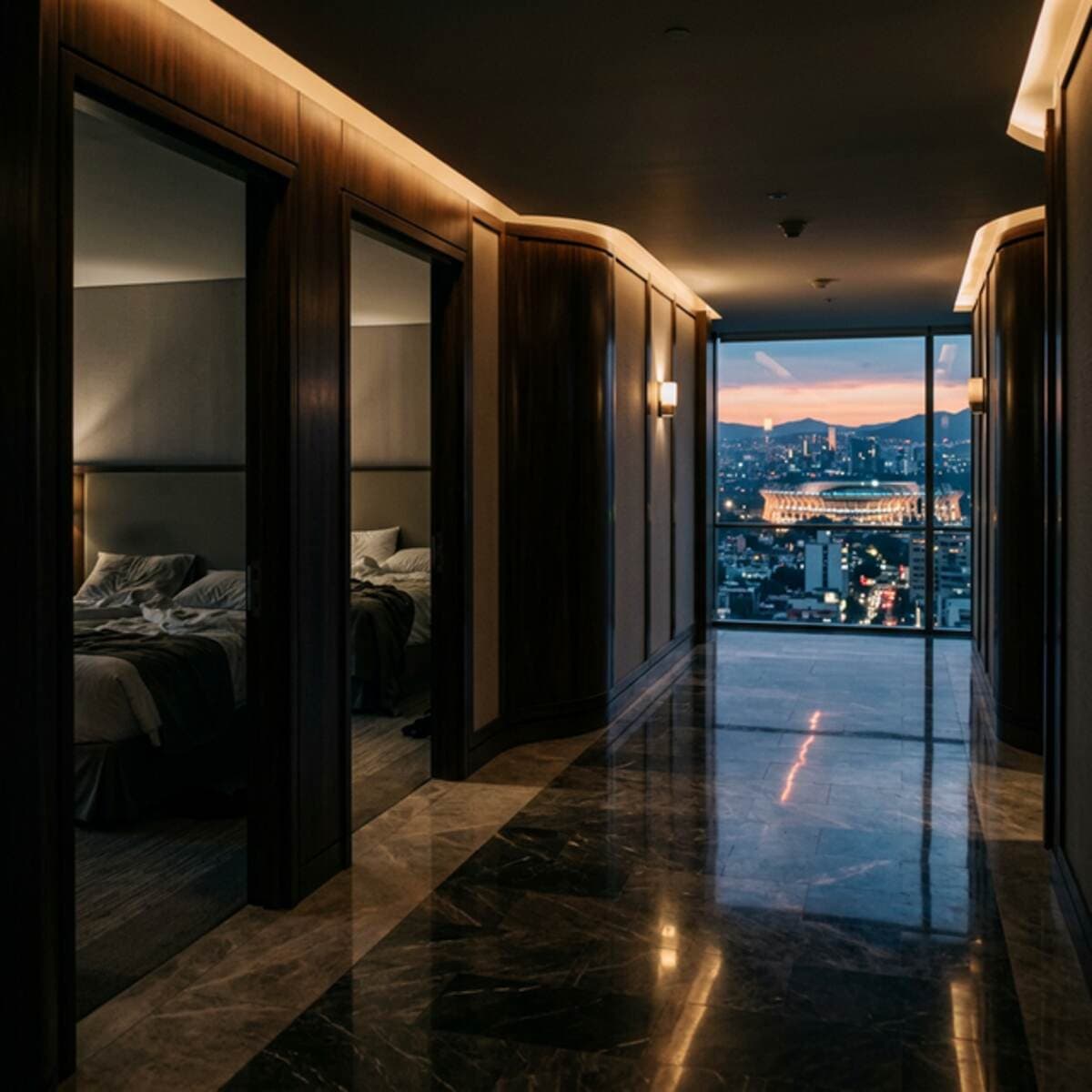
One hundred days before the 2026 FIFA World Cup opens in Mexico City, football's governing body has quietly released 800 of the 2,000 hotel rooms it had pre-booked in the Mexican capital — a 40% reduction that has set off a wave of concern, confusion, and counter-narratives from industry figures and government officials alike.
The news was made public by Alberto Albarrán Leyva, director general of the Mexico City Hotel Association (AHRM), in an interview with the newspaper El Financiero — and it has sparked a surprisingly heated debate about what the cancellations actually mean for Mexico City's World Cup preparations.
📋 What Happened: The Facts
The numbers are not in dispute. FIFA had reserved 2,000 hotel rooms in Mexico City to be occupied during the World Cup period. In the last 30 days, it cancelled 800 of those reservations, cutting its footprint in the capital's hotel sector by 40%.
Albarrán told El Financiero directly: in the lead-up to the event, "there have been more cancellations than reservations."
The timing is attention-grabbing. These cancellations were made public at the 100-day mark before the World Cup — a window when major tournament organisers are typically locking in, not walking back, their logistical commitments.
🤷 FIFA's Explanation: Strategic Over-Booking
Before panic sets in, Albarrán himself offered the most important context — though it was perhaps buried beneath the headline-grabbing numbers.
"FIFA booked 2,000 rooms months ago to prevent [running short] and guarantee its operation. Over time, it canceled some reservations because it realized that it was no longer going to use them. There is no other reason or other type of context." — Alberto Albarrán Leyva, Director General, Mexico City Hotel Association
This is standard practice in large-scale event management. Major organisations — from Olympic committees to FIFA — routinely over-book hotel inventory far in advance as a buffer against uncertainty. As operational plans become clearer, excess inventory is released. What looks alarming from outside is often a sign of logistical maturity, not retreat.
The Hotel Association confirmed it does not anticipate any further cancellations from the organising committee.
📊 Mexico City's Hotel Sector: The Real Numbers
Despite the cancellations, the overall picture for Mexico City's hospitality industry ahead of the World Cup remains broadly positive.
| Metric | Figure |
|---|---|
| Total hotel rooms in Mexico City | 63,000+ |
| Hotels in the capital | 800+ |
| FIFA rooms cancelled | 800 (of 2,000 originally booked) |
| Expected hotel occupancy by June 11 | 85% |
| Deloitte estimate of World Cup visitors | 836,000 domestic & international tourists |
| Hotel Association estimate of visitors | 1.5 – 2 million total |
| Average tourist stay | 1.8 days |
The Hotel Association acknowledges it will need to redesign its marketing and sales strategy to fill the rooms FIFA has released — but with 85% projected occupancy at opening, the sector is far from catastrophising.
✈️ Mexico City as the World Cup "Trampoline"
One of the more interesting insights from Albarrán's comments is the concept of Mexico City functioning as a "trampoline" — a transit hub through which World Cup visitors will pass en route to matches in other Mexican host states.
Mexico's World Cup venues span multiple cities across the country:
- 🏙️ Mexico City — Estadio Azteca (Group stage, knockouts)
- 🏙️ Guadalajara — Estadio Akron (Group stage, knockouts)
- 🏙️ Monterrey — Estadio BBVA (Group stage, knockouts)
Many international fans flying into Mexico will land in the capital before connecting to Guadalajara or Monterrey. Jalisco and Nuevo León — the states hosting those cities — will benefit from tourist spend that begins in Mexico City.
This "trampoline" dynamic means the capital's economic impact from the World Cup is likely larger than raw hotel occupancy figures suggest — extended stays before games and returning visits after them will add up quickly.
🏛️ The Government Fires Back: Sectur's Counter-Narrative
Mexico City's Secretariat of Tourism (Sectur) was not pleased with Albarrán's public comments, and issued a sharp rebuttal on Wednesday morning.
"These versions do not reflect the reality of the planning process or the behavior of the international tourism market." — Mexico City Secretariat of Tourism (Sectur)
Citing a report by global travel technology company Amadeus — titled "Travel Insights: Football's Biggest Event in 2026" — Sectur fired back with its own data:
- Travel searches for the World Cup period have grown by more than 35%
- Host cities are registering steady increases in travel intent and flight bookings
- Mexico City has over 63,000 rooms across 800 hotels capable of absorbing demand at scale
"These indicators reflect a positive overall trend in tourism demand associated with the tournament," the ministry concluded.
The public dispute between the Hotel Association and the Tourism Ministry is itself revealing — it suggests that the real anxiety is not about whether tourists will come, but about how much of the economic upside the capital will capture versus the other Mexican host cities.
🔍 Reading Between the Lines: The Real Story
Strip away the competing narratives and the actual situation looks like this:
The problem is real, but modest. FIFA cancelled rooms it intentionally over-booked. Mexico City's hotel sector now has more inventory to fill independently, and will need to work harder on direct marketing to international tourists rather than relying on FIFA-block bookings.
The demand signals are strong. A 35% rise in travel searches and rising flight bookings to Mexican World Cup cities are meaningful indicators. The Amadeus data does not suggest a demand collapse — it suggests healthy and growing interest.
The 85% occupancy target is achievable. With 63,000 rooms and a projected 836,000+ tourist arrivals through Deloitte's conservative estimate — or the Hotel Association's bullish 1.5–2 million figure — Mexico City's hotels have more than enough incoming demand to fill their capacity, FIFA or no FIFA.
The real risk is distribution. Whether hotels in upscale zones like Polanco (where FIFA's original block bookings were concentrated) versus more accessible areas of the city will fill equally is a genuine question the sector is now working through.
📅 Key Dates for Mexico City's World Cup
| Date | Event |
|---|---|
| June 11, 2026 | World Cup opening day — target 85% hotel occupancy |
| June 2026 | Mexico City group-stage matches at Estadio Azteca |
| July 2026 | Knockout rounds in Mexico City |
The complete FIFA World Cup 2026 match schedule includes multiple high-profile fixtures at the Estadio Azteca — Mexico's iconic national stadium and the only venue to have hosted two World Cup finals (1970 and 1986). Those matches alone guarantee substantial inbound tourism to the capital regardless of FIFA's internal hotel logistics.
🎯 The Bottom Line
FIFA releasing 800 hotel rooms is administrative housekeeping, not a red flag. Large events over-book and right-size constantly. The fact that Mexico City's Hotel Association went public with the numbers — rather than managing it discreetly — is what turned routine logistics into a news story.
What the episode does reveal is the underlying tension between FIFA's global operational planning and the local hospitality sectors that built significant revenue expectations around it. With 100 days to go, both sides now have the incentive — and the time — to close that gap.
Mexico City's World Cup moment is still very much on track.
Further reading: Full 2026 World Cup Match Schedule · All 16 Host Cities Guide · World Cup 2026 Ticket Guide · Mexico at the 2026 World Cup
Sources: Mexico News Daily, El Financiero, La Jornada, ESPN, Amadeus Travel Insights, Deloitte, Sectur Mexico City